What Is the Ankh? The Ancient Egyptian Symbol Explained
The Symbol That Refuses to Die
Few symbols from the ancient world are as instantly recognizable as the Ankh.
It appears on temple walls.
It is carved into ancient monuments.
It can be seen in the hands of gods, pharaohs, and priests throughout Egyptian artwork.
More than five thousand years after its creation, the Ankh continues to appear in books, films, jewellery, artwork, and popular culture.
Yet despite its fame, many people still ask the same question:
What is the Ankh?
The simple answer is that it is one of the most important symbols of ancient Egypt.
The longer answer is far more fascinating.
Because while historians understand much about the Ankh, some aspects of its meaning remain open to interpretation.
Like many ancient symbols, part of its power lies in its mystery.
What Does the Ankh Look Like?
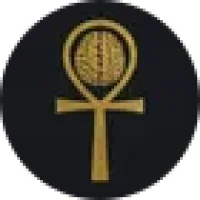
The Ankh resembles a cross with a loop at the top.
It is sometimes described as:
- The Key of Life
- The Key of the Nile
- The Cross of Life
- The Egyptian Cross
Its distinctive design makes it one of the easiest ancient symbols to identify.
Unlike many Egyptian hieroglyphs, the Ankh remained popular for thousands of years and appeared throughout Egyptian history.
It became so important that it was incorporated into religious ceremonies, royal symbolism, architecture, and funerary art.
What Did the Ankh Mean?
Most Egyptologists agree that the Ankh represented life.
However, the Egyptians rarely viewed life and death as completely separate.
For them, existence was part of a continuous journey.
As a result, the Ankh came to represent several related ideas:
- Life
- Vitality
- Immortality
- Eternal existence
- Spiritual continuity
In many depictions, Egyptian gods hold the Ankh close to a person’s mouth or nose.
Many scholars believe this symbolized the giving of life or the breath of life itself.
To the Egyptians, life was sacred.
The Ankh became one of the primary symbols used to represent that belief.
The Ankh in Ancient Egyptian Art
The Ankh appears everywhere in Egyptian artwork.
Pharaohs carried it.
Priests displayed it.
Gods were frequently shown holding one or more Ankhs.
Its repeated appearance demonstrates its importance within Egyptian culture.
In temple carvings, Ankhs are often shown being offered to rulers by the gods.
This imagery reinforced the idea that life itself was a divine gift.
The symbol became closely associated with both earthly existence and the afterlife.
Why Is It Called the Key of Life?
One of the Ankh’s most popular modern nicknames is the Key of Life.
This description comes partly from its shape.
The loop resembles a handle.
The lower portion resembles a key.
Whether ancient Egyptians actually viewed it as a key is less certain.
However, the symbolism fits naturally with Egyptian beliefs.
The Ankh appeared to represent access to life itself.
Not merely physical life, but eternal life.
In that sense, the symbol acted as a key connecting different states of existence.
Theories About the Origin of the Ankh
Despite centuries of study, historians still debate exactly how the Ankh originated.
Several theories have been proposed.
The Sandal Strap Theory
One of the oldest explanations suggests the Ankh developed from the shape of a sandal strap.
Ancient Egyptian writing occasionally used everyday objects as symbols.
Some researchers believe the Ankh evolved from one such object.
While possible, this explanation does not fully account for the symbol’s enormous spiritual significance.
The Union Theory
Another popular theory suggests the Ankh represents the union of opposites.
In this interpretation:
- The vertical section represents masculine energy.
- The horizontal section represents feminine energy.
- The loop symbolizes unity.
Whether this interpretation reflects ancient Egyptian beliefs remains uncertain, but it continues to attract interest.
The Sunrise Theory
Some scholars propose that the symbol represents the sun rising above the horizon.
The loop becomes the sun.
The crossbar becomes the horizon.
The vertical section represents the path of life.
Given the importance of the sun in Egyptian religion, this theory remains plausible.
The Ankh and the Gods
Many Egyptian deities were closely associated with the Ankh.
These included:
- Osiris
- Isis
- Horus
- Ra
The symbol frequently appears in their hands.
This reinforces its connection to life, divine power, and spiritual continuity.
Ancient Egyptians believed the gods maintained order within the universe.
The Ankh became one of the visual representations of that life-giving power.
The Ankh and the Afterlife
Ancient Egypt is famous for its beliefs regarding the afterlife.
The Egyptians invested enormous effort preparing for what they believed came next.
Mummification.
Tombs.
Funerary texts.
Burial treasures.
All reflected the belief that death was not the end.
The Ankh naturally became connected to these beliefs.
It symbolized continuation.
A reminder that life extended beyond physical existence.
This association helped cement its importance throughout Egyptian society.
Why the Ankh Remains Popular Today
Most ancient symbols eventually fade into obscurity.
The Ankh has done the opposite.
Its popularity has continued to grow.
Part of this comes from its visual simplicity.
The design is elegant.
Memorable.
Timeless.
But appearance alone does not explain its endurance.
The deeper reason is that the ideas it represents remain relevant.
Life.
Purpose.
Connection.
Meaning.
These themes are just as important today as they were thousands of years ago.
The Ankh in Modern Culture
Today the Ankh appears in:
- Jewellery
- Art
- Literature
- Film
- Fashion
- Spiritual traditions
Different groups interpret the symbol in different ways.
Some view it primarily as a historical artefact.
Others see it as a spiritual symbol.
Many simply appreciate its connection to one of history’s most fascinating civilizations.
Regardless of interpretation, the Ankh continues to inspire curiosity.
What the Ankh Reveals About Ancient Egypt
The Ankh offers a glimpse into the mindset of ancient Egyptians.
It reveals a culture deeply interested in:
- Life
- Continuity
- Purpose
- Spiritual questions
The Egyptians did not merely build monuments.
They developed ideas about existence itself.
The Ankh became one of the clearest visual expressions of those ideas.
Its survival across thousands of years demonstrates how powerful symbols can become when they touch universal human concerns.
Is There a Hidden Meaning?
Many modern theories suggest the Ankh contains hidden knowledge.
Some associate it with sacred geometry.
Others connect it to lost civilizations or forgotten wisdom.
While such ideas remain speculative, they reflect something important.
The Ankh continues to provoke questions.
People instinctively feel that ancient symbols often carried layers of meaning beyond their surface appearance.
Whether those deeper meanings can ever be fully recovered remains uncertain.
But the search itself remains fascinating.
The Enduring Power of Symbols
The Ankh reminds us that symbols can outlive entire civilizations.
Kings vanish.
Empires collapse.
Languages disappear.
Yet certain symbols endure.
They survive because they communicate ideas that remain relevant across generations.
The Ankh is one of those rare symbols.
A simple design carrying profound meaning.
Final Thoughts
The Ankh is far more than an ancient Egyptian decoration.
It is a symbol of humanity’s enduring fascination with life itself.
For thousands of years, it has represented existence, continuity, and the possibility that there is more to life than what we immediately see.
Whether viewed historically, culturally, or spiritually, the Ankh remains one of the most powerful symbols ever created.
Its exact origins may remain uncertain.
Its message remains surprisingly clear.
Life matters.
And the search to understand it continues.
Explore More Ancient Egyptian Mysteries
If you enjoy exploring ancient Egypt, sacred symbols, hidden history, consciousness, and humanity’s search for meaning, discover the Jonathan Chambers novels.
Because some of the oldest symbols may still have stories left to tell.